

Jurassic Park – When Science Rewrote Nature’s Rulebook
 difdesignerUpdated 3 months Ago2 Mins read
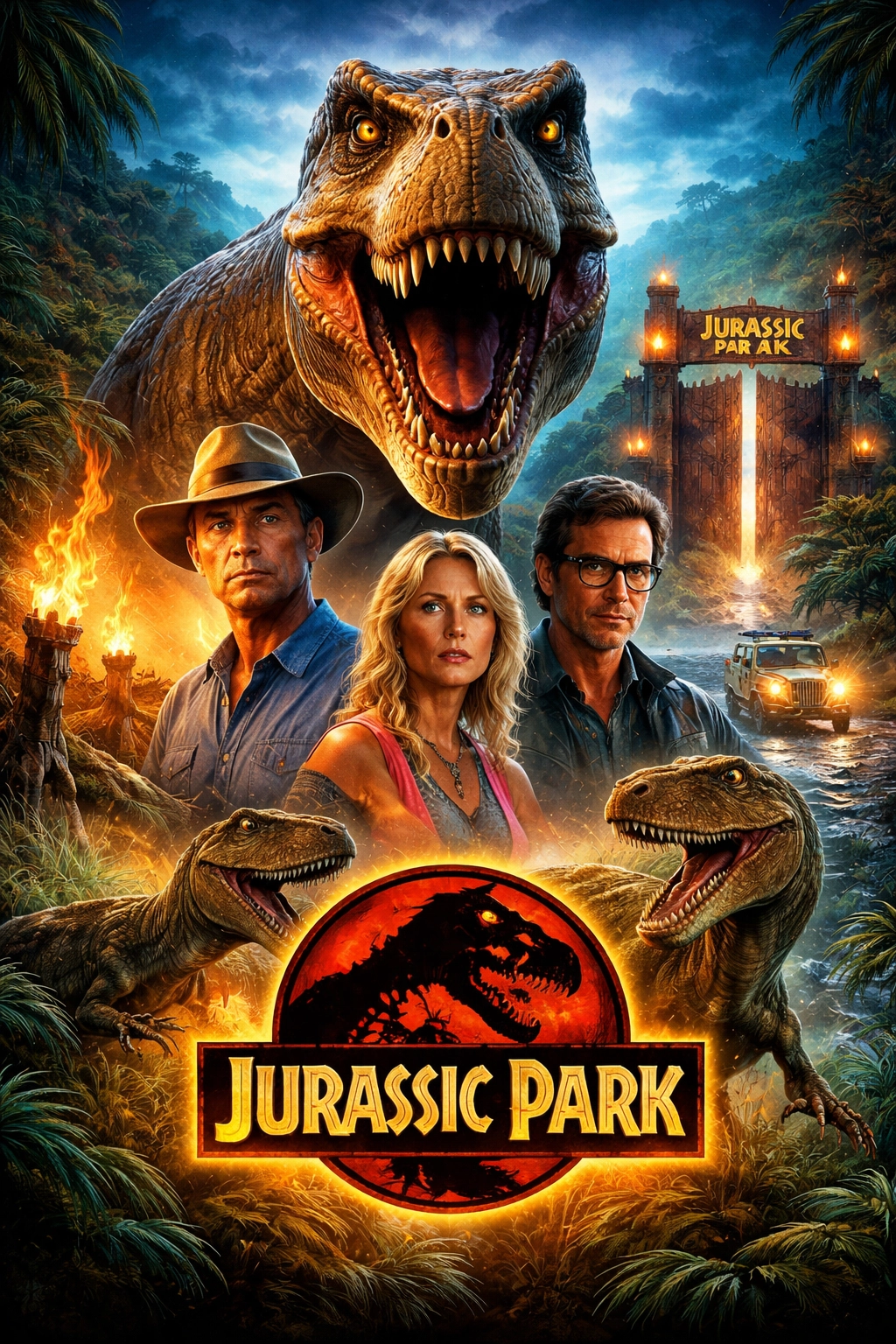
Few films have captured the imagination of science lovers and moviegoers alike as powerfully as Jurassic Park. Released in 1993, this groundbreaking science-fiction adventure wasn’t just about dinosaurs—it was about the thrilling and terrifying consequences of playing with the building blocks of life.
Directed by the legendary Steven Spielberg, the film brought to life the vision of author Michael Crichton, who imagined a world where extinct creatures could walk the Earth again—thanks to genetic engineering.
🧬 The Science Behind the Spectacle
At the heart of Jurassic Park lies a bold scientific idea: extracting dinosaur DNA from mosquitoes preserved in amber, filling in missing genetic gaps with frog DNA, and cloning living dinosaurs.
In 1993, this concept felt almost magical.
But today?
Scientists have successfully cloned animals like sheep and endangered species.
Genetic editing tools such as CRISPR allow precise DNA modification.
De-extinction projects aim to revive extinct species like the woolly mammoth.
While bringing back dinosaurs remains beyond our reach (DNA degrades over millions of years), the film’s scientific foundation no longer feels purely fictional. Modern biotechnology has moved astonishingly close to the boundaries imagined by Crichton.
The movie asks a timeless question:
[restrict]
> “Your scientists were so preoccupied with whether or not they could, they didn’t stop to think if they should.”
That ethical dilemma feels even more relevant in today’s era of gene editing and AI.
🎬 The Main Crew – The Minds and Faces Behind the Magic
Sam Neill as Dr. Alan Grant – The skeptical paleontologist whose love for fossils is tested by living giants.
Laura Dern as Dr. Ellie Sattler – Intelligent, brave, and scientifically grounded.
Jeff Goldblum as Dr. Ian Malcolm – The charismatic chaos theorist who delivers unforgettable warnings.
Richard Attenborough as John Hammond – The visionary entrepreneur who dreams big—but underestimates nature.
The chemistry among the cast makes the science feel personal. Their fear, awe, and moral conflict mirror our own reactions to revolutionary discoveries.
And we must acknowledge the unforgettable music by John Williams—a score that transforms dinosaurs from monsters into majestic wonders.
🦕 Why It Still Feels Real Today
What made Jurassic Park revolutionary was not just its storytelling but its visual realism. The blend of animatronics and early CGI changed cinema forever. Even three decades later, the dinosaurs look believable.
Today’s advancements in:
Artificial intelligence
Advanced CGI rendering
Synthetic biology
DNA sequencing
…make the film’s premise feel closer to reality than ever before.
Imagine combining CRISPR gene editing with synthetic embryo development and advanced incubation technologies. While we cannot recover intact dinosaur DNA, modern science is already editing genomes of living species—reshaping evolution in real time.
The film almost predicted our current biotech revolution.
🌍 The Core Message
Beyond the thrills and roaring T-Rex, Jurassic Park is a cautionary tale about scientific responsibility.
It reminds us:
Power without wisdom is dangerous.
Nature cannot be fully controlled.
Ethics must evolve as fast as technology.
In an age of gene editing, AI, and synthetic life research, this message feels more urgent than ever.
⭐ Final Verdict
Jurassic Park is not just a movie—it is a milestone in science fiction cinema. It blends cutting-edge scientific ideas with human emotion, ethical tension, and breathtaking adventure.
Even today, when biotechnology has advanced dramatically, the film remains both thrilling and thought-provoking.
It doesn’t just ask, “Can we bring dinosaurs back?”
It asks, “If we could… should we?”
[/restrict]









Leave a comment